561-319-0600 chris@itsmold.com Serving Broward, Palm Beach & North Miami
FL License #MRSA 3454

Sample Assessment Report

See exactly what you'll receive when you schedule a professional mold assessment with ITS Mold.

Sample Report for Demonstration Purposes Only All names, addresses, and identifying details in this report are fictional. Photos and lab results are representative of a typical residential mold assessment. Your report will be customized to your specific property and findings.

Property & Assessment Details

Mold Assessment Report

ITS Mold LLC — FL License #MRSA 3454

1247 Palm Vista Drive, Boca Raton, FL 33431
Robert & Maria Santos
Single-Family Residence (3 BR / 2 BA, 1,850 sq ft)
2004
March 12, 2026
Christopher Finnegan, MRSA 3454
Musty odor in master bathroom; visible discoloration on ceiling
4 (3 air + 1 surface swab)

Assessment Findings

Summary of Conditions

The assessment of 1247 Palm Vista Drive revealed elevated mold levels in the master bathroom and adjacent hallway, primarily associated with a slow leak at the shower supply line behind the wall. Indoor air sampling detected Stachybotrys chartarum (commonly known as "black mold") and elevated Aspergillus/Penicillium spore counts significantly above outdoor baseline levels. Moisture readings in the affected wall cavity ranged from 42% to 58%, well above the acceptable threshold of 15%. The exterior control sample and living areas tested within normal limits. Professional remediation is recommended for the master bathroom and hallway wall cavity, followed by post-remediation clearance testing.

Inspection Results

Each area of concern is documented with photographs, instrument readings, and observations.
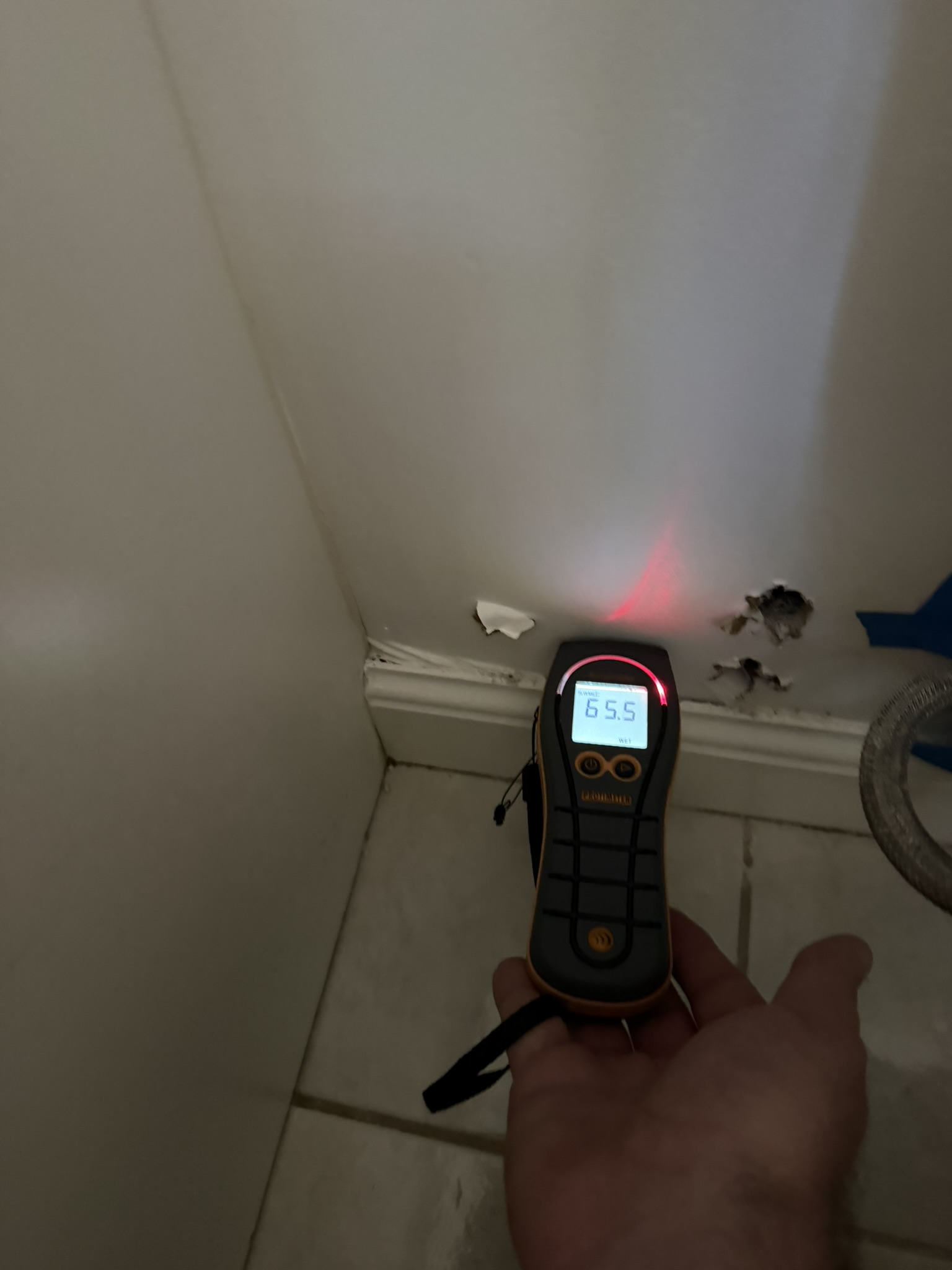
Moisture meter showing elevated readings on bathroom wall Master Bathroom
High Concern

Elevated Moisture in Bathroom Wall

Pin-type moisture meter detected readings of 42–58% in the drywall surrounding the shower supply line. Normal drywall moisture content is below 15%. This sustained moisture has created conditions conducive to active mold growth behind the wall surface.
Moisture Reading: 42–58% (Normal: <15%)
Probable Cause: Slow leak at shower supply line
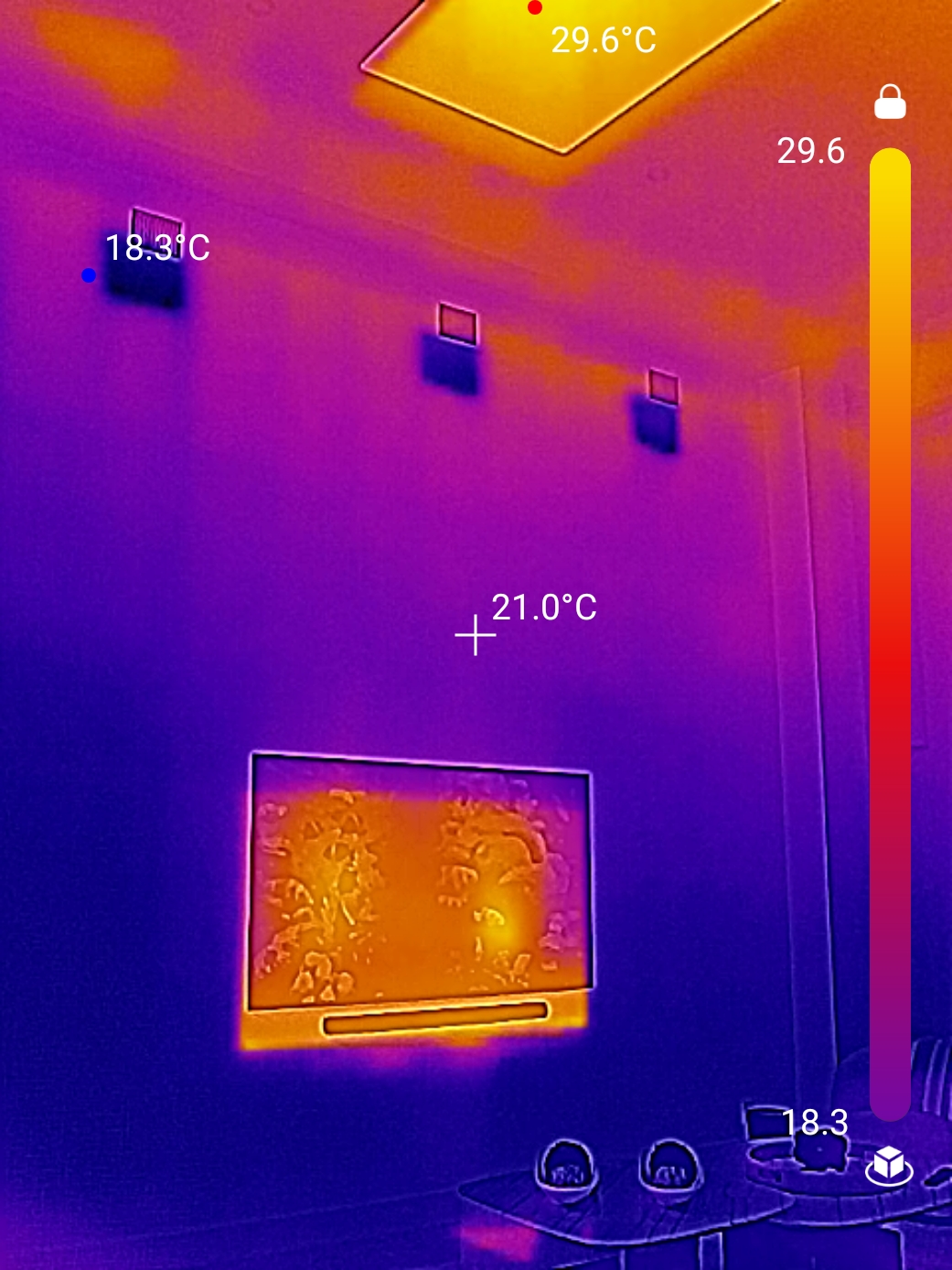
Thermal image showing temperature differential on wall Hallway Wall
Moderate Concern

Thermal Anomaly on Shared Wall

Infrared thermal imaging revealed a temperature differential of 8°F on the hallway wall shared with the master bathroom. The cooler area corresponds to moisture migration from the leaking supply line, extending approximately 4 feet from the bathroom doorframe.
Temperature Differential: 8°F below ambient
Affected Area: ~4 ft from bathroom doorframe
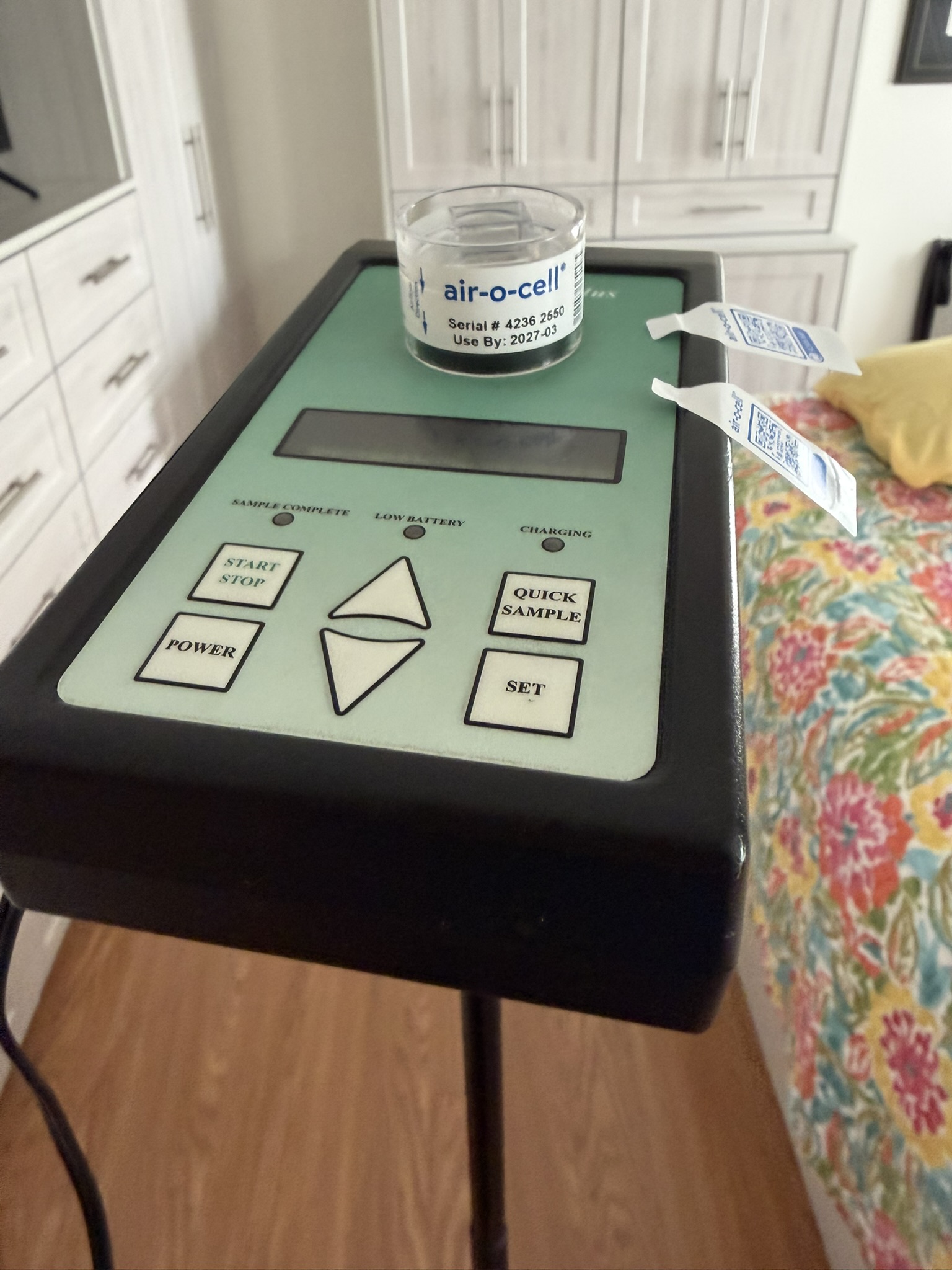
Air sampling pump collecting indoor air sample Air Sampling
High Concern

Elevated Airborne Spore Counts

Air-O-Cell cassette sampling in the master bathroom detected Aspergillus/Penicillium at 4,200 spores/m³ and Stachybotrys at 320 spores/m³. The outdoor control sample measured Aspergillus/Penicillium at 680 spores/m³ with no Stachybotrys detected, confirming the indoor source is active and localized.
Indoor Asp/Pen: 4,200 spores/m³
Outdoor Asp/Pen: 680 spores/m³ (baseline)
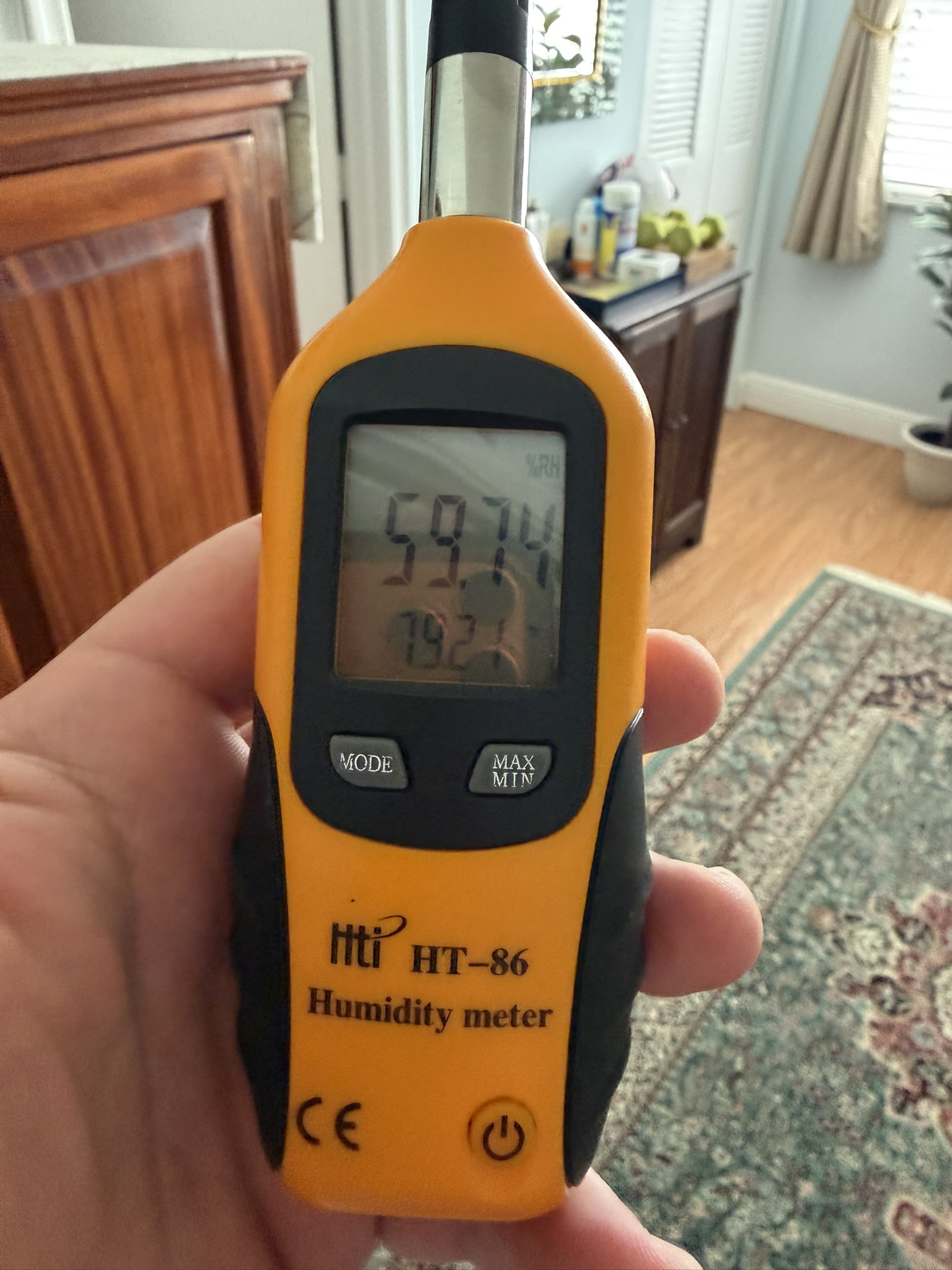
Humidity meter showing indoor relative humidity Indoor Environment
Within Normal Limits

General Indoor Air Quality

Ambient conditions throughout the remainder of the home were within acceptable parameters. Relative humidity in the main living areas measured 52%, and air sampling in the living room showed spore counts consistent with outdoor baseline levels. No visible mold growth was observed outside the master bathroom area.

Indoor Humidity: 52% (Acceptable: 30–60%)
Living Room Spores: Within normal limits

Air & Surface Sample Results

All samples analyzed by an AIHA-accredited laboratory using direct microscopy.

Air Sample Analysis (Air-O-Cell Cassettes)

Spore trap analysis — results reported in spores per cubic meter (spores/m³)

Mold Type Outdoor Control
Sample #1
Master Bathroom
Sample #2
Living Room
Sample #3
Status
Aspergillus/Penicillium 680 4,200 720 Elevated Indoors
Stachybotrys ND 320 ND Detected Indoors
Cladosporium 1,400 1,100 980 Normal
Chaetomium ND 160 ND Detected Indoors
Basidiospores 440 380 400 Normal
Total Spore Count 2,520 6,160 2,100 Elevated in Bathroom
Key Finding: Indoor spore counts in the master bathroom are 2.4x the outdoor baseline, with Stachybotrys and Chaetomium detected only indoors. These species are strong indicators of chronic water damage and active mold growth within the wall cavity. ND = Not Detected.

Surface Swab Analysis

Direct microscopy of surface sample collected from bathroom ceiling discoloration

Sample Location Sample # Species Identified Growth Rating Status
Bathroom Ceiling Sample #4 Aspergillus niger, Stachybotrys chartarum Heavy (4+) Active Growth Confirmed
Key Finding: Surface swab confirms active Stachybotrys chartarum and Aspergillus niger colonization on the bathroom ceiling. The heavy (4+) growth rating indicates sustained moisture conditions and established mold colonies requiring professional remediation.

Moisture & Humidity Readings

Instrument readings taken at the time of inspection using calibrated professional equipment.

Bathroom Wall (Shower Side)

58%
Moisture Content Critical

Hallway Wall (Shared)

42%
Moisture Content Elevated

Bathroom Ceiling

28%
Moisture Content Above Normal

Living Room Wall

9%
Moisture Content Normal

Indoor Relative Humidity

52%
Relative Humidity Normal

Outdoor Relative Humidity

68%
Relative Humidity Typical for Region

Recommendations

Based on the assessment findings, the following remediation steps are recommended.

  1. Identify & Repair the Source of Moisture ITS Mold uses a variety of professional tools — including moisture meters, thermal imaging, and humidity monitors — to help identify the source of the problem so it can be corrected. While ITS Mold is not a leak detection company, and sometimes there can be more than one contributing issue, we will guide you through locating the source so that it can be repaired or maintained prior to putting everything back together.
  2. Professional Mold Remediation Protocol If mold contamination is confirmed by laboratory results, we will prepare a detailed remediation protocol complete with sketches and highlighted areas of concern for the licensed mold remediation company (MRSR) to follow. This protocol serves as the roadmap for the entire remediation process.
  3. Containment & Best Practices We will always make recommendations based on IICRC S520 and NORMI guidelines for remediation, including proper containment areas, negative air pressure, HEPA filtration, worker protection, and other industry best practices to ensure the work is done safely and effectively.
  4. HEPA Vacuuming & Cleaning The protocol will address all items in the areas of concern, specifying the best methods for cleaning, removal, or restoration of affected materials. This includes HEPA vacuuming, antimicrobial treatment, and guidance on what can be cleaned versus what needs to be replaced.
  5. Post-Remediation Clearance Testing This is the step where the assessor confirms that remediation has been completed appropriately and that Condition 2 or Condition 3 air quality is no longer a concern. Air samples are collected and analyzed to verify that spore counts have returned to acceptable levels before containment is removed and the space is cleared for reconstruction.
  6. Ongoing Prevention & Maintenance We also like to recommend steps you can take to prevent this from happening again. This may include improving ventilation, monitoring humidity levels, maintaining plumbing, and other proactive measures tailored to your property to help you stay mold-free going forward.

Ready for Your Assessment?

Every property is different, but every client receives the same thorough, detailed report. Schedule your professional mold assessment today and know exactly what you're dealing with.