Independent, color-coded remediation protocols with a scope you can bid and an adjuster can price, and clearance testing scheduled around your containment — across Palm Beach, Broward and North Miami.
A remediation job runs on two documents from the assessor: the protocol that defines the work, and the clearance that closes it. When the protocol is vague, the bid and the invoice turn into an argument. When the clearance is slow or unclear, containment stays up and the rebuild waits.
Chris Finnegan has spent more than 28 years in construction, water damage restoration, estimating and property claims. His protocols state the areas, the removal extent, the equipment and the clearance criteria in terms a crew can follow and an adjuster can price. ITS Mold performs assessment only — we do not perform remediation, we charge every client the same published price, and we do not pay or accept referral fees.
Documents written to be followed, priced and relied on.
Affected areas, removal extent beyond the visible damage, containment and equipment, and the IICRC S520 Condition for each area, with a color-coded sketch of the scope. Included with the assessment when remediation is needed.
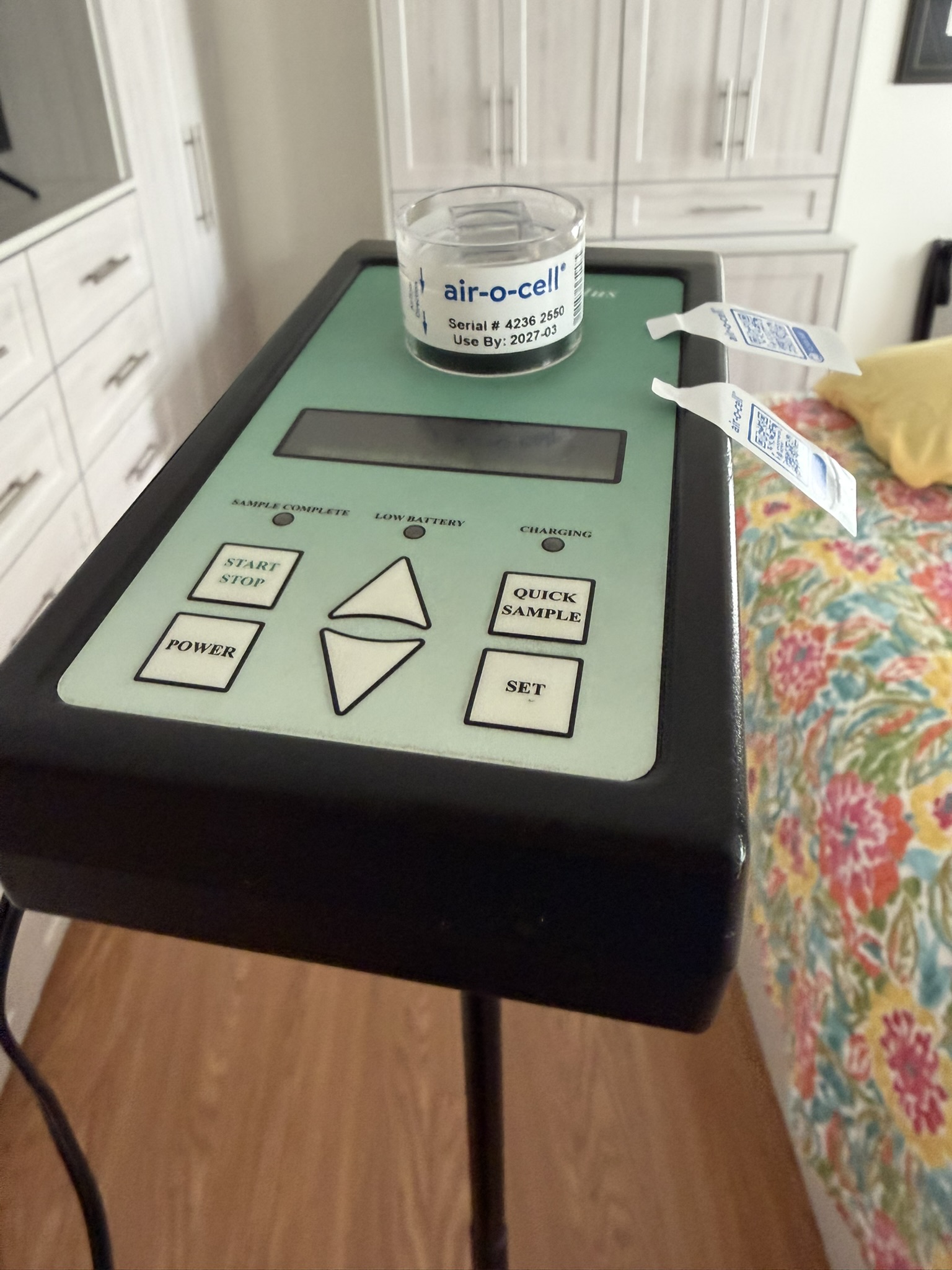
Visual inspection inside containment, moisture readings against the dry standard, and air sampling compared with a concurrent outdoor control. We shut down air filtration on arrival and allow a 30-minute settling period before sampling.
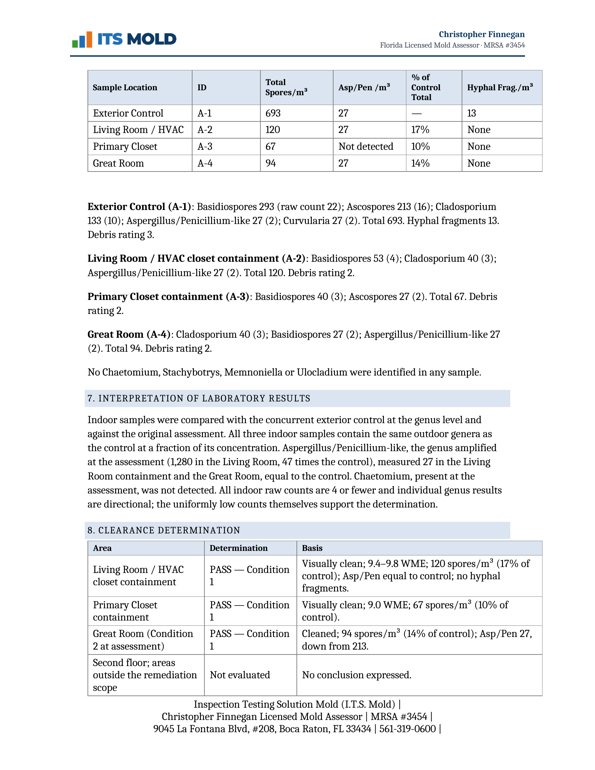
Tell us when final cleaning will be complete and we book the visit for it. Results are typically available within one business day of sampling, with a pass or fail call as soon as they are in.
If a containment does not pass, you get the location, the result and the likely reason — visual, moisture or airborne — so the re-clean is targeted instead of repeated.
The items that cause most failed clearances, from final cleaning to fogging before testing. Download the PDF.
Accredited laboratory analysis, chain of custody on every sample, photos and moisture readings — a file that carriers, owners and attorneys can rely on.
Every ITS Mold protocol includes a color-coded sketch of the work. Removal areas, containment boundaries and equipment placement are drawn on the floor plan with a legend, so the crew on site, the estimator and the adjuster are all looking at the same scope.
Bid it from the sketch, set up from the sketch, and show the adjuster the sketch when the invoice is questioned. See a sample protocol (PDF) →
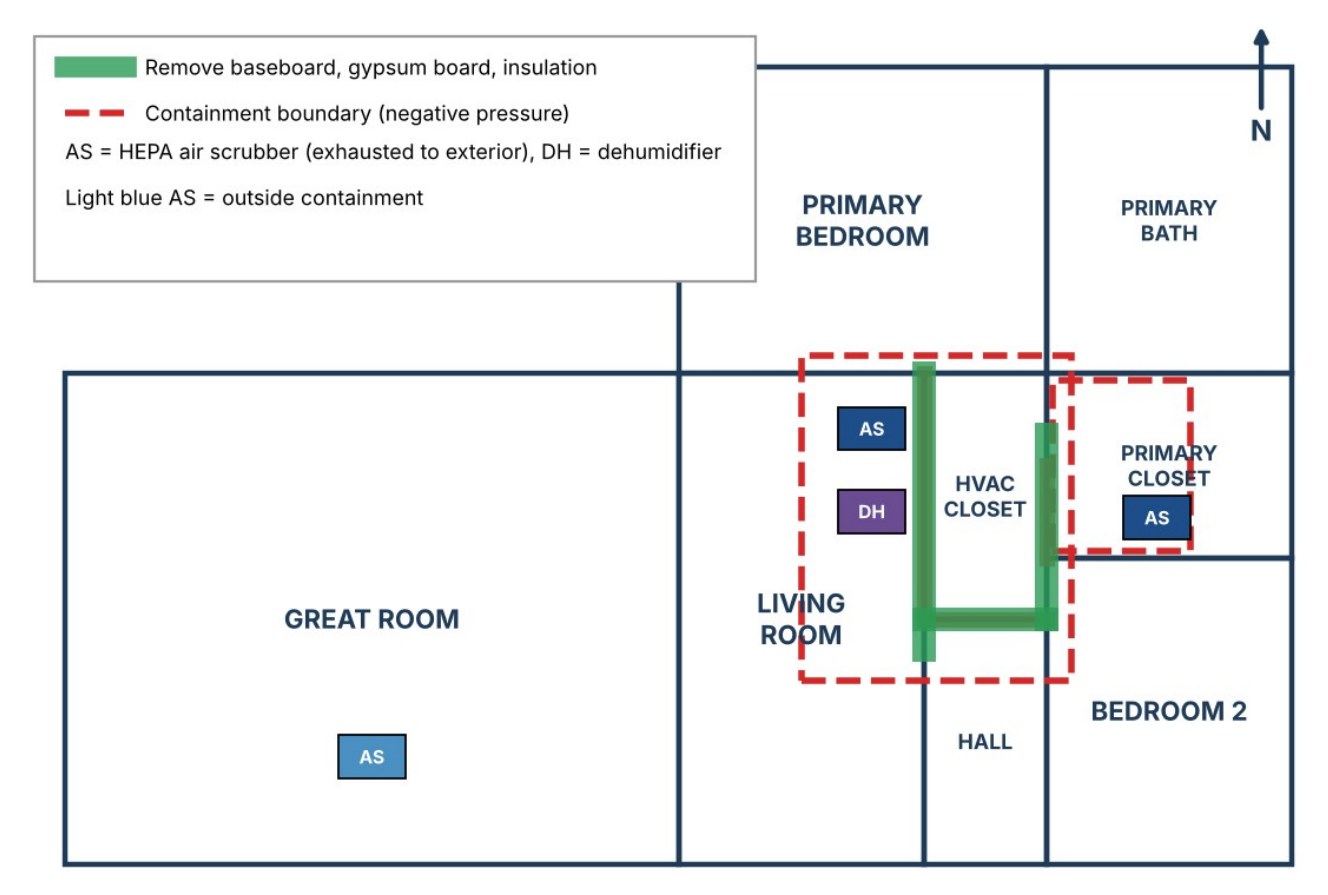
Sample protocol sketch (fictional property)
The full checklist is a free two-page PDF. These are the items we see missed most often.
Remaining framing and subfloor must meet the dry standard against an unaffected reference reading. Keep your drying logs; we will ask for them.
HEPA vacuum, damp wipe, let it dry, HEPA vacuum again — including plates, sills and the containment plastic itself.
Run air scrubbers continuously for at least 24 hours after final cleaning, with clean pre-filters.
No fogging, misting or antimicrobial spraying in the 24 hours before testing. It loads the cassette and does not replace physical cleaning.
Carriers and their attorneys look hard at a protocol or a clearance written by an assessor with ties to the contractor doing the work. An independent protocol and an independent clearance are harder to dispute — which means fewer arguments about scope and fewer delays getting paid for the work you did.
The same published rates apply to every client — contractor, owner, manager or carrier.
Tell us the property, what you need and when final cleaning will be complete. We'll confirm the scope and fee before scheduling.